How Long After Shocking Your Pool Can You Swim
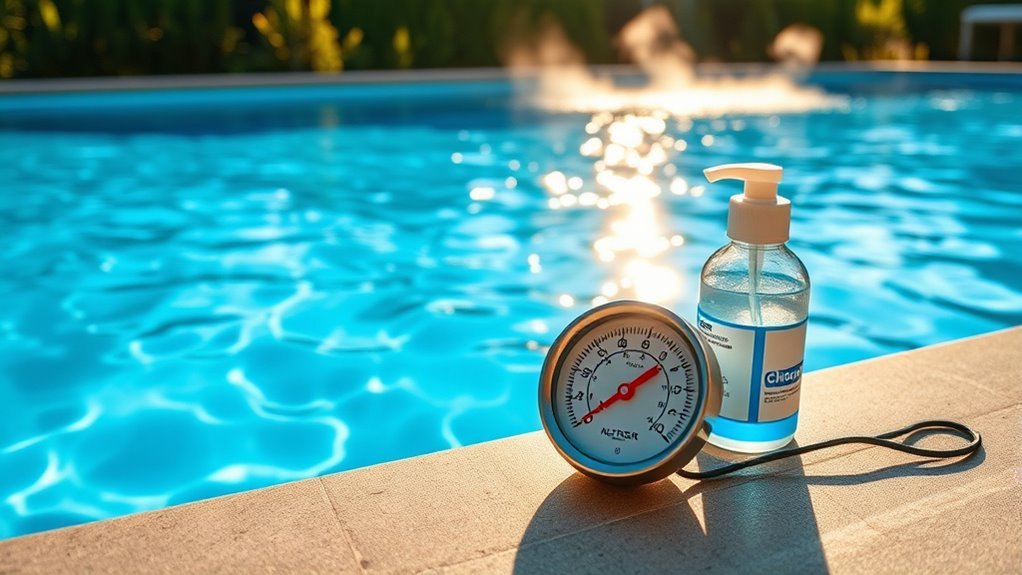
After shocking your pool, it’s important to know how long after shocking your pool you can swim safely. Wait until chlorine levels fall below 3 ppm and the water is clear before entering the pool to avoid skin and eye irritation.
This waiting period typically takes 8 to 24 hours, depending on the type of shock used, water temperature, and sunlight exposure. Always use a reliable test kit to confirm that chlorine and pH levels are balanced.
Only swim when all chemical levels are stable to ensure your safety. Keep reading to learn how to properly check your pool’s levels and maintain perfect pool chemistry.
Understanding Pool Shocking and Its Purpose
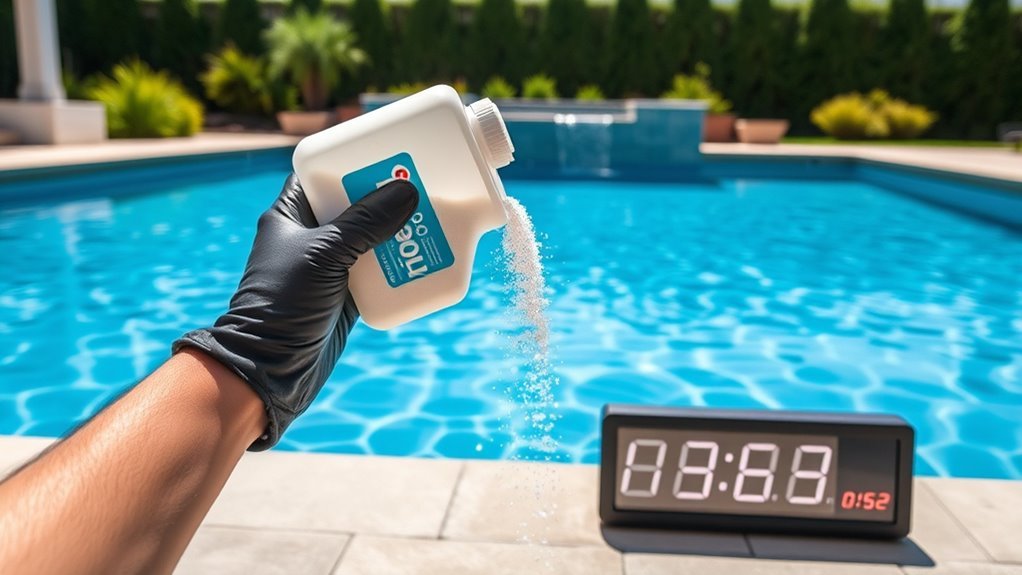
Although pool shocking might sound intimidating, it’s simply a powerful method to quickly raise your pool’s chlorine levels and eliminate contaminants.
When you shock your pool, you’re fundamentally adding a strong dose of chlorine or other oxidizing agents to destroy bacteria, algae, and organic matter that regular chlorine can’t handle alone.
This process helps restore water clarity and keeps your pool safe for swimming.
You’ll usually shock your pool after heavy use, rainstorms, or when the water starts looking cloudy or has a strong odor.
By understanding this, you’ll know why shocking is an important maintenance step.
It’s not just about cleaning; it’s about resetting your pool’s chemical balance to maintain a healthy swimming environment.
The Role of Chlorine in Pool Shocking
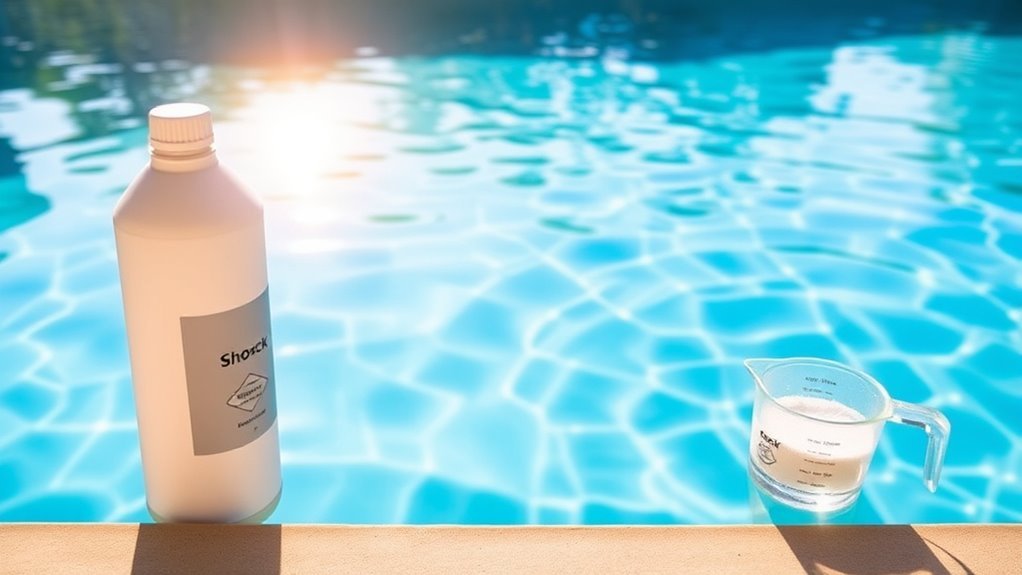
How exactly does chlorine work when you shock your pool? When you add chlorine during shocking, it rapidly raises the chlorine level to kill bacteria, algae, and other contaminants. This process sanitizes your water by breaking down organic matter that regular chlorine levels can’t handle.
Here’s a simple breakdown:
| Chlorine Role | Effect on Pool |
|---|---|
| Oxidizes contaminants | Removes organic waste |
| Destroys bacteria | Prevents illness |
| Eliminates algae | Keeps water clear |
| Boosts sanitizer | Resets chlorine effectiveness |
Ideal Chlorine Levels for Safe Swimming

After chlorine works to eliminate bacteria and algae during shocking, you need to guarantee the levels drop to a safe range before swimming.
Ideally, your pool’s free chlorine level should be between 1 and 3 parts per million (ppm) for safe swimming.
Anything above 5 ppm is generally too strong and can cause skin and eye irritation.
You can use a reliable test kit to measure chlorine levels accurately.
Once the chlorine concentration reaches that safe range, it’s okay to jump in without risking discomfort or health issues.
Keeping an eye on these levels ensures your pool remains clean and safe, letting you enjoy your swim without worry.
Factors Influencing Wait Time After Shocking
Since the time you need to wait before swimming depends on several variables, understanding these factors can help you judge when your pool is safe.
Knowing the factors affecting wait times helps you determine when your pool is safe to swim.
The type of shock you use plays a big role. Calcium hypochlorite shocks usually require longer waiting times than non-chlorine shocks.
Water temperature also affects how quickly chlorine dissipates. Warmer water speeds up chlorine breakdown, allowing a shorter wait.
Additionally, sunlight exposure breaks down chlorine faster, so sunny days might reduce your wait time compared to cloudy ones.
Your pool’s size and circulation system impact how evenly and quickly the shock disperses, influencing safety timing.
How to Test Chlorine Levels Before Swimming
Knowing the factors that affect chlorine dissipation helps, but the best way to guarantee your pool is safe is by testing the chlorine levels directly. Grab a reliable pool test kit or test strips designed to measure free chlorine.
Dip the strip or use the test solution according to the instructions, then compare the color change to the chart provided. Your goal is to confirm the free chlorine level is between 1 and 3 parts per million (ppm), considered safe for swimming.
Avoid swimming if the chlorine level is above 5 ppm, as it can irritate your skin and eyes. Testing ensures you’re not just guessing. It gives you confidence that your pool has settled to a safe chlorine level before you jump in.
Different Types of Pool Shock and Their Effects
When you shock your pool, the type of shock you choose directly impacts how quickly chlorine levels drop and how safe it’s to swim afterward. Calcium hypochlorite, or cal hypo, is common and quickly raises chlorine levels but takes longer to dissipate, meaning you might wait 24-48 hours before swimming.
Sodium dichlor dissolves fast and acts quickly, often allowing swimming within 8-12 hours.
Lithium hypochlorite is fast-acting and less dusty, with a similar waiting time to cal hypo.
Non-chlorine shock, usually potassium peroxymonosulfate, oxidizes contaminants without raising chlorine levels, letting you swim almost immediately after treatment.
Knowing these differences helps you plan when to shock your pool and when it’s safe to jump back in.
Common Mistakes to Avoid After Shocking Your Pool
If you don’t follow proper after-shock procedures, you could end up with cloudy water or even skin irritation. One common mistake is jumping in too soon before chlorine levels drop. High chlorine can irritate your eyes and skin.
Avoid swimming too soon after shocking; high chlorine levels can cause skin irritation and cloudy water.
Another error isn’t running your pool filter long enough after shocking; this helps clear out contaminants.
Avoid adding more chemicals immediately after shocking, as this can disrupt the balance and prolong waiting times.
Also, don’t overlook testing your water before swimming; relying on guesswork risks swimming in unsafe conditions.
Finally, skipping routine maintenance like brushing pool walls after shocking can leave debris that affects water clarity.
Stay patient and diligent to enjoy a safe, clean pool after shocking.
Recommended Waiting Times for Various Pool Shock Products
Although different pool shock products vary in formulation, you should always wait a specific amount of time before swimming to make certain chlorine levels have dropped to safe limits.
For calcium hypochlorite shocks, a common choice, wait at least 8 hours, preferably overnight.
If you use liquid chlorine shock, 6 to 8 hours is usually sufficient due to its quicker dissolving nature.
Potassium monopersulfate, a non-chlorine shock, typically requires less downtime, about 4 hours, since it doesn’t raise chlorine levels as much.
Always check the product label for exact recommendations, as some specialized formulas might need longer.
Weather conditions, pool size, and filtration efficiency also affect how fast chlorine dissipates, so when in doubt, err on the side of caution and wait a bit longer before taking a dip.
Signs Your Pool Is Safe to Swim In Post-Shock
Waiting the recommended time after shocking your pool is just one step to guarantee it’s safe for swimming. Before you plunge in, check a few key signs.
Waiting the recommended time after shocking your pool is essential—but always confirm safety with key tests before swimming.
First, test the chlorine level—it should be back within the safe range, typically 1-3 ppm.
Next, look at the water clarity; it should be crystal clear with no cloudy or murky patches.
Also, the water should feel comfortable on your skin, without a strong chemical smell or irritation.
Finally, verify the pH level is balanced, usually between 7.2 and 7.8.
If all these conditions are met, your pool is safe for swimming.
Always rely on accurate testing rather than guesswork to protect your health and enjoy your pool safely.
Tips for Maintaining Balanced Pool Chemistry After Shocking
After shocking your pool, you’ll want to keep its chemistry balanced to guarantee the water stays safe and inviting. Proper maintenance helps prevent algae growth and skin irritation.
Here are three key tips to maintain balanced pool chemistry after shocking:
1. Test Regularly: Use a reliable test kit to check pH, chlorine, and alkalinity levels daily for at least a week after shocking.
Aim for pH between 7.2 and 7.6 and chlorine levels around 1-3 ppm.
2. Adjust Chemicals as Needed: If pH or alkalinity drifts, add the appropriate chemicals like muriatic acid or baking soda to bring levels back to range.
3. Run Your Filter: Keep your pool filter running 8-12 hours daily to circulate water and remove contaminants effectively.
Following these steps ensures your pool stays crystal clear and ready for swimming.
Frequently Asked Questions
Can Pool Shock Affect Pool Equipment or Surfaces?
Yes, pool shock can affect your pool equipment and surfaces if you use too much or don’t dilute it properly.
You’ll want to follow instructions carefully to avoid corrosion, discoloration, or damage to liners and metal parts.
Is It Safe to Shock a Pool During Hot Weather?
Yes, you can shock your pool during hot weather, but you should do it in the early morning or late evening to avoid rapid chlorine loss and chemical reactions.
This keeps your pool safe and effective.
How Often Should You Shock a Pool During Summer?
You should shock your pool once a week during summer to keep it clean and clear.
If you notice cloudy water or after heavy use, you might need to shock it more often to maintain balance.
Can Pets Swim in the Pool After Shocking?
You shouldn’t let pets swim right after shocking; the chemicals can irritate their skin and eyes.
Wait until chlorine levels drop to normal—usually 24 to 48 hours—before letting your furry friends jump in safely.
Does Pool Shocking Impact Pool Water Temperature?
No, shocking your pool won’t impact the water temperature. It only raises chlorine levels to kill bacteria and algae.
You can expect the temperature to stay the same, so it won’t feel any warmer or cooler.
Conclusion
Now that you’ve shocked your pool, the wait begins—the invisible chlorine dancing beneath the surface, working hard to cleanse every corner. You’re itching to jump in, but patience pays off.
Keep testing those chlorine levels; watch them drop to the safe zone. Only when the water sparkles clear, and the chemical balance whispers safety, can you take that invigorating plunge.
So hold on just a little longer—how long after shocking your pool can you swim? Your perfect swim is almost within reach once the chlorine levels are safe.