
7 Factors That Influence How Much Swimming Pools Cost
When deciding on a swimming pool, you’ll want to contemplate seven key factors that affect cost. Understanding swimming pool costs involves considering the type, size, materials, terrain, and additional features. The type of pool—like above-ground or concrete—impacts both price and durability.
Size and shape influence materials and labor needs, while your choice of construction materials affects longevity and upkeep. Your site’s terrain can raise preparation expenses, and extra features like heating or lighting add more to the tab.
Don’t forget ongoing maintenance costs, too. Explore further to understand how these elements shape your overall budget.
Type of Swimming Pool
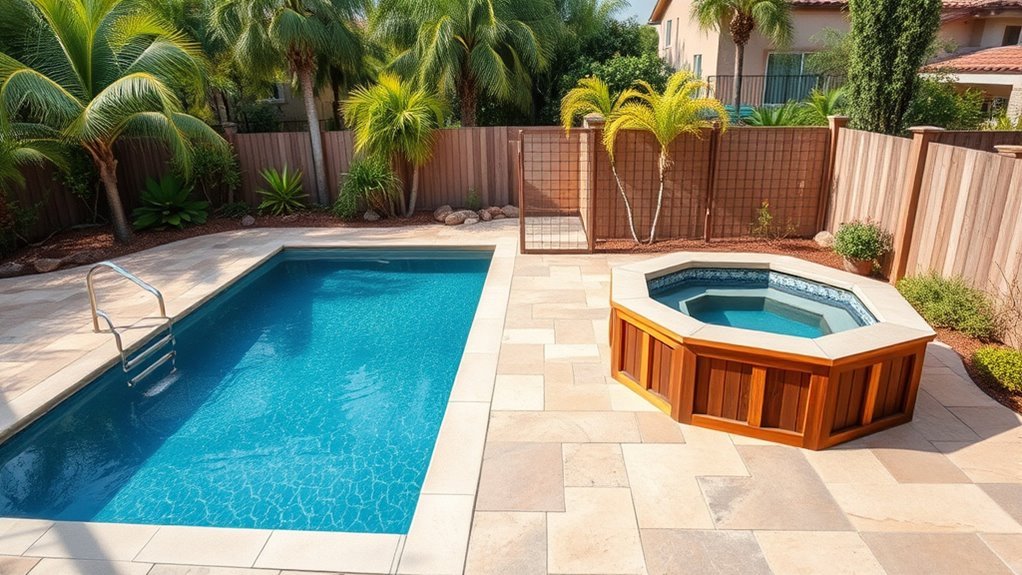
When choosing a swimming pool, the type you select greatly affects the overall cost. You’ll find three main types: above-ground, inground concrete, and inground fiberglass pools.
Above-ground pools are the most budget-friendly, easy to install, and ideal if you want a temporary or seasonal option.
Above-ground pools offer an affordable, easy-to-install solution perfect for temporary or seasonal use.
Concrete pools offer the most customization but come with a higher price tag due to labor and materials.
Fiberglass pools strike a balance, providing quicker installation and lower maintenance costs, but they limit your design choices.
Each type also impacts maintenance expenses and durability, so consider how long you plan to keep the pool.
Knowing these differences helps you pick the right option that fits your budget and preferences without surprises later on.
Size and Shape of the Pool
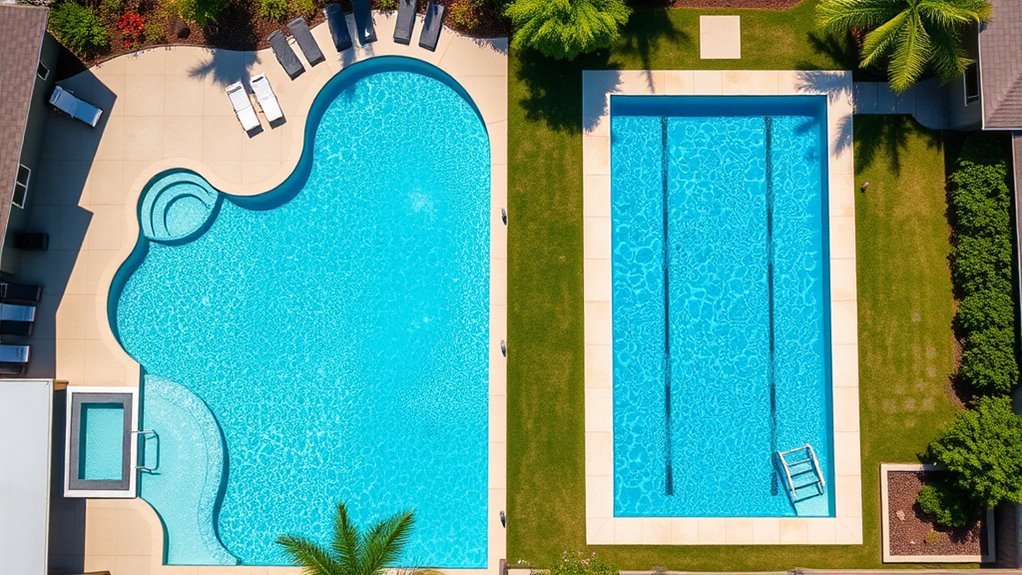
Since the size and shape of your pool directly affect the materials and labor required, they play a crucial role in determining the overall cost. Larger pools need more excavation and concrete, while complex shapes demand extra time and skill to build.
You can save money by choosing standard shapes, but custom designs offer unique aesthetics.
| Pool Size | Cost Impact |
|---|---|
| Small (under 300 sq ft) | Lower material & labor costs |
| Medium (300-600 sq ft) | Moderate costs |
| Large (600+ sq ft) | Higher costs |
| Complex Shapes | Increased labor & design fees |
Balancing your pool’s size and shape with your budget ensures you get the best value without overspending.
Materials Used in Construction
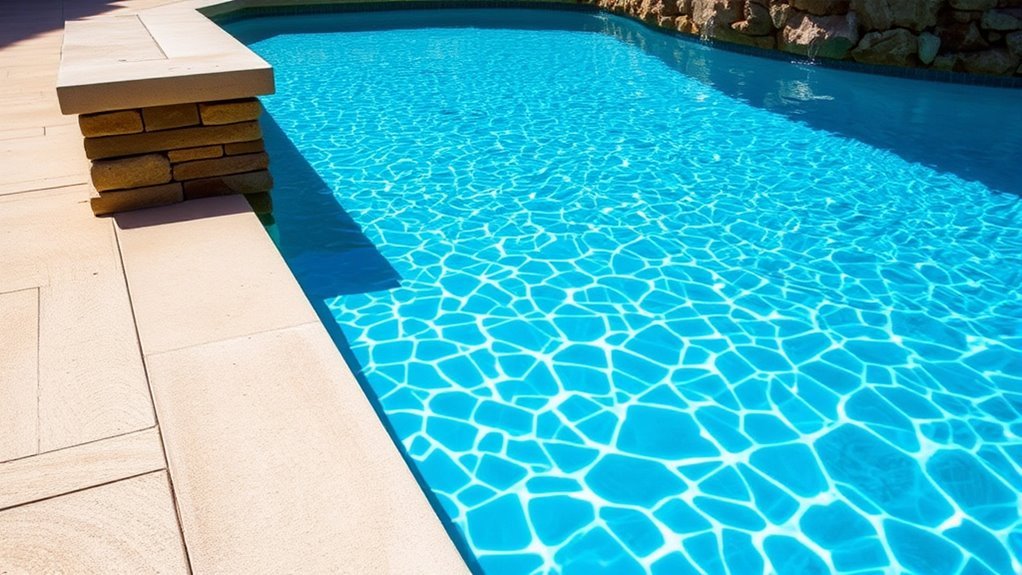
What construction materials you choose can substantially impact both the cost and durability of your pool. Vinyl liners tend to be the most affordable option, but they may require replacement every 7 to 15 years.
Choosing the right pool materials affects cost and longevity, with vinyl liners being budget-friendly but less durable.
Fiberglass pools offer a quicker installation and low maintenance but usually come with a higher upfront price.
Concrete pools are highly customizable and extremely durable, yet they often involve the highest initial cost and longer construction times.
You’ll also want to evaluate the finish materials inside the pool, such as plaster, tile, or aggregate, as these affect both aesthetics and maintenance expenses.
Location and Site Preparation
Where you place your pool and how you prepare the site can considerably affect your overall costs. If your backyard has uneven terrain or rocky soil, expect higher expenses for grading, excavation, and soil removal. Pools on flat, open land typically cost less to install.
Accessibility matters too. If heavy equipment struggles to reach the site, labor and transport costs rise. You’ll also need to think about existing structures, trees, or utility lines that might require removal or relocation, adding to site prep expenses.
Drainage plays a role; poor drainage can lead to extra work to prevent water buildup around your pool.
Additional Features and Accessories
Although the basic pool structure sets the foundation, adding features and accessories can substantially impact your total cost. You might want to customize your pool with lighting, heating, or water features. Each adds comfort and style but increases expenses. Choosing the right extras depends on your budget and desired pool experience.
| Feature | Purpose | Average Cost |
|---|---|---|
| Pool Lighting | Enhances ambiance, safety | $800 – $2,500 |
| Heating System | Extends swimming season | $1,500 – $5,000 |
| Water Features | Adds aesthetic appeal | $1,000 – $10,000 |
| Automation | Simplifies maintenance | $1,200 – $4,000 |
Consider these options carefully. They can transform your pool but also raise your initial investment.
Labor and Installation Costs
Adding features and accessories can quickly increase your pool’s overall cost, but the labor and installation expenses often make up a significant portion of the budget as well. When planning your pool, keep in mind these key labor factors:
- Excavation complexity: Hard soil or rocky terrain raises digging costs.
- Pool type: Concrete pools require more labor than fiberglass or vinyl.
- Site accessibility: Tight spaces or tricky locations can slow installation.
- Local labor rates: Prices vary by region and contractor experience.
Understanding these factors helps you anticipate installation costs accurately. You can also save by choosing simpler designs or working with experienced crews who streamline the process.
Ultimately, labor and installation costs reflect the effort and skill needed to turn your pool dreams into reality.
Ongoing Maintenance and Operating Expenses
Since maintaining your pool requires regular attention, you’ll need to budget for ongoing maintenance and operating expenses. These costs include chemicals to balance water, routine cleaning, and equipment upkeep like pumps and filters.
You’ll also face higher utility bills due to water circulation and heating, especially if you use a pool heater regularly. Seasonal tasks such as opening and closing the pool add to the expenses, whether you do it yourself or hire professionals.
Neglecting maintenance can lead to costly repairs, so staying consistent preserves money in the long run. By planning for these ongoing costs, you ensure your pool remains safe, clean, and enjoyable without unexpected financial strain.
Keep in mind, maintenance costs vary depending on pool size, type, and local service rates.
Frequently Asked Questions
How Does the Time of Year Affect Pool Installation Costs?
You’ll pay less for pool installation during the off-season since demand drops, and contractors offer discounts.
In peak season, costs rise due to high demand and limited availability, so timing your installation wisely can save you money.
Are There Financing Options Available for Building a Pool?
Yes, you can find financing options like personal loans, home equity lines, or specialized pool loans. Many pool companies also offer payment plans, so you don’t have to pay everything upfront when building your pool.
These options can make the process more manageable by spreading out the cost over time. It’s a good idea to compare rates and terms to find the best fit for your budget.
What Impact Do Local Regulations Have on Pool Pricing?
Local regulations can increase your pool’s cost by requiring permits, safety barriers, or specific materials.
You’ll need to follow these rules closely, as non-compliance might lead to fines or costly modifications later on.
How Do Insurance Costs Change After Installing a Pool?
Like a rising tide, your insurance costs usually increase after installing a pool. You’ll likely pay more because insurers see pools as higher risks.
Can Pool Costs Be Reduced With DIY Projects?
Yes, you can reduce pool costs with DIY projects by handling tasks like landscaping, painting, or installing simple features yourself.
Just be careful with complex plumbing or electrical work to avoid costly mistakes or safety issues.
Conclusion
When weighing whether to welcome a wondrous swimming pool, remember that size, shape, and site greatly shape the sum you’ll spend. Materials matter, and so do marvelous features that make your pool more memorable.
Labor and lasting maintenance lean heavily on your ledger, too. By carefully considering these countless cost components, you can confidently create a captivating, cost-conscious oasis that fits your finances and fulfills your fun.
Immerse yourself in decisions with diligence and delight! Understanding the factors that influence swimming pools cost ensures you build the perfect backyard retreat without breaking the bank.