3 Factors That Determine How Much It Does Cost to Build a Swimming Pool
When building a swimming pool, your costs mostly depend on three factors: pool size and shape, materials and construction methods, and location plus site prep. Bigger or custom-shaped pools need more work and materials. Choosing concrete, vinyl, or fiberglass affects durability and price.
Meanwhile, uneven terrain or difficult access ups excavation and grading costs. Understanding these elements helps you budget wisely. Keep exploring to uncover more details that could impact your pool project’s final price.
Pool Size and Shape
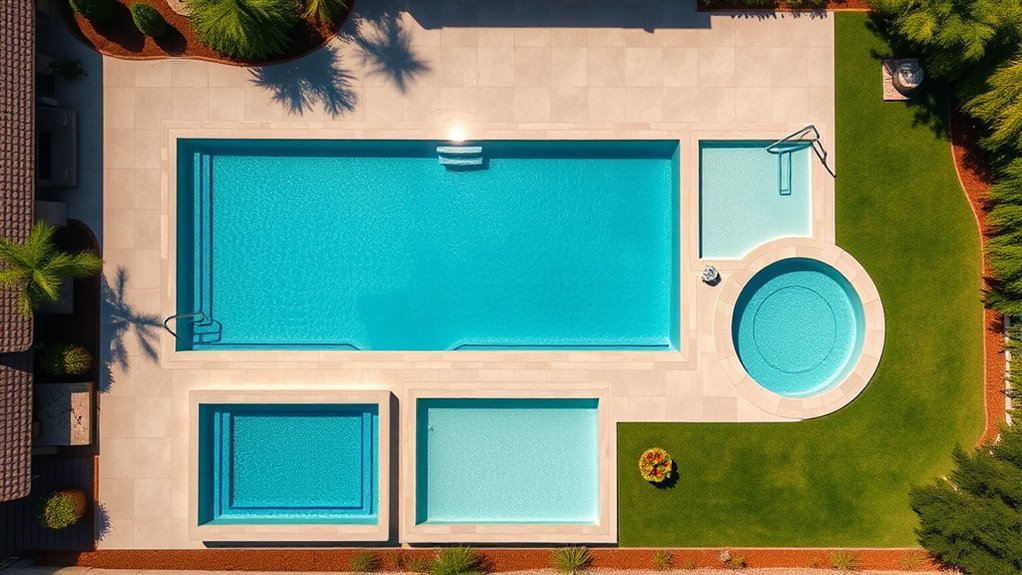
Because the size and shape of your pool directly affect the materials and labor required, they play a major role in determining the overall cost. When you choose a larger pool, you’ll need more excavation, concrete, and finishing work, which naturally increases expenses.
Similarly, complex shapes with curves or custom designs require more precise craftsmanship and time, pushing costs higher than simple rectangular pools. If you opt for a standard size and shape, like a rectangle, you’ll benefit from streamlined construction and potentially lower prices.
Keep in mind that your pool’s depth also matters; deeper pools need more excavation and structural support.
Materials and Construction Techniques
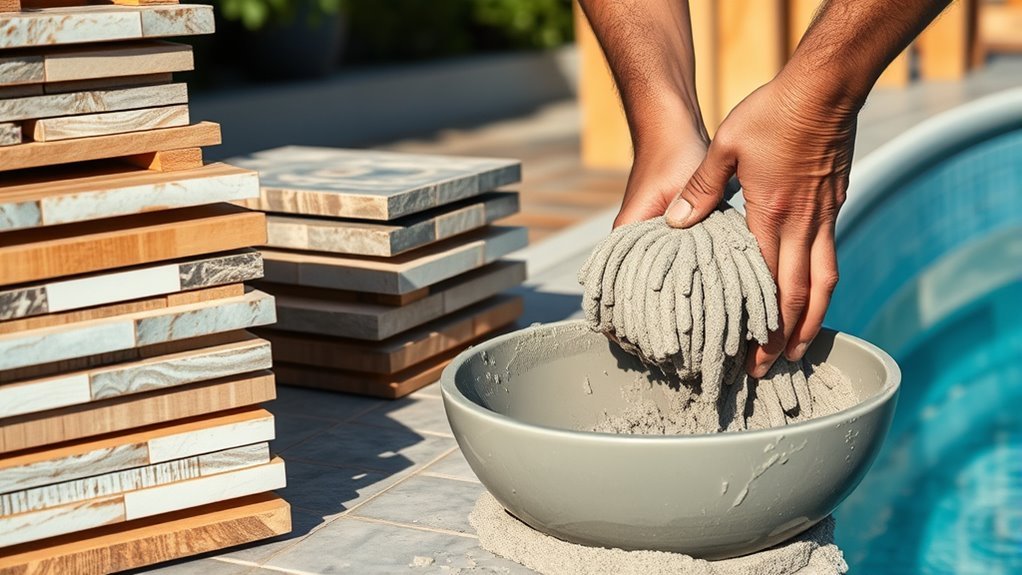
Once you’ve settled on the size and shape, the next factor that shapes your pool’s cost is the choice of materials and construction techniques. You can choose between concrete, vinyl, or fiberglass pools.
Concrete pools offer durability and customization but tend to be the priciest and take longer to build.
Concrete pools provide lasting strength and design flexibility but usually come with higher costs and longer construction times.
Vinyl pools cost less upfront, but the liners wear out and need replacement every 7-15 years.
Fiberglass pools come pre-molded, so installation is quicker and often cheaper, but you’re limited to set shapes and sizes.
Construction methods also impact the price; for example, shotcrete or gunite spraying for concrete pools is more expensive but provides strength.
Your budget and preferences determine which materials and techniques suit you best while influencing the final cost.
Location and Site Preparation
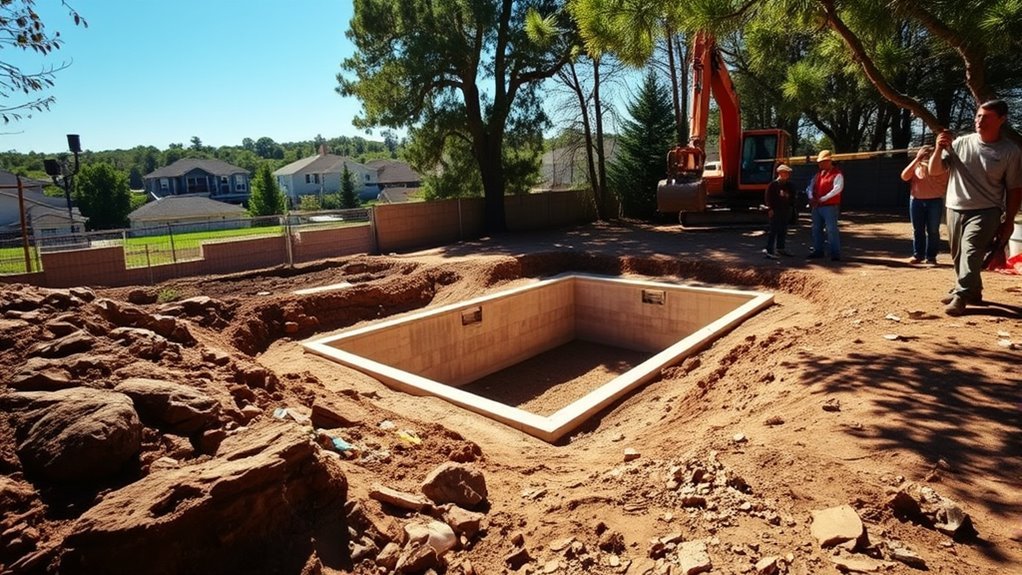
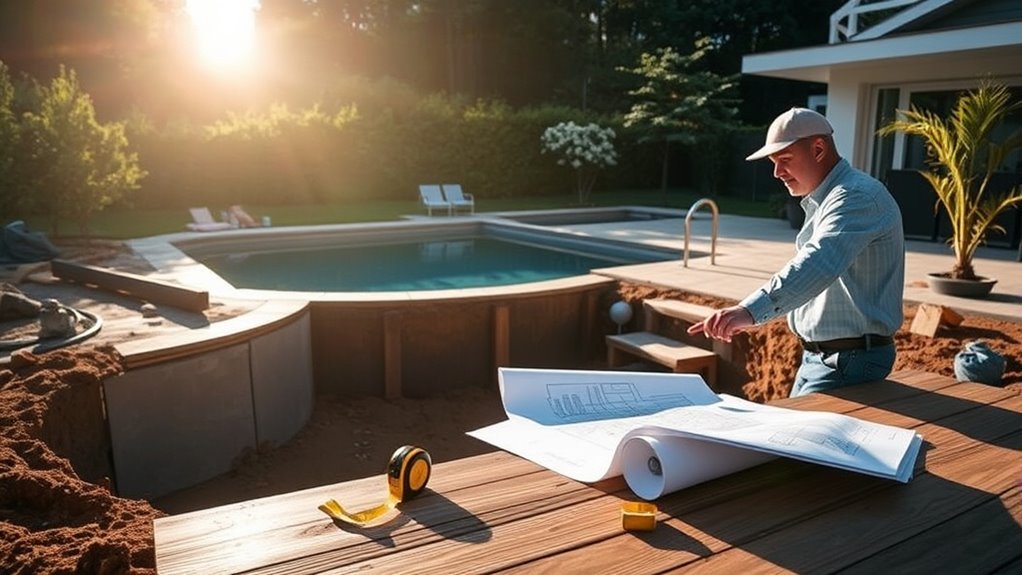
When choosing where to place your pool, the location and site preparation play a crucial role in determining the overall cost.
If your yard has uneven terrain, slopes, or rocky soil, expect higher expenses for grading and excavation.
You’ll also need to take into account accessibility; tight spaces or difficult access may require specialized equipment, increasing labor costs.
Additionally, local regulations or homeowner association rules might dictate where you can build, potentially adding permits or design adjustments.
Drainage issues and underground utilities can further complicate site work, necessitating extra precautions and expenses.
By carefully evaluating your site’s conditions before starting, you can better anticipate costs and avoid unexpected surprises during construction.
Proper site preparation ensures a stable foundation, making your pool safer and more durable in the long run.
Frequently Asked Questions
How Long Does It Take to Build a Swimming Pool?
It usually takes you about 6 to 12 weeks to build a swimming pool. The timeline depends on your pool’s size, design, weather conditions, and any permits needed.
You’ll want to plan accordingly for delays.
What Maintenance Costs Should I Expect After Installation?
You should expect costs for chemicals, cleaning supplies, equipment repairs, and regular servicing.
Seasonal maintenance, energy bills for pumps and heaters, plus occasional resurfacing, will add up.
Budget around 5-10% of your pool’s initial cost annually.
Are There Financing Options Available for Pool Construction?
Yes, you can find financing options like personal loans, home equity loans, or specialized pool financing plans.
It’s smart to compare interest rates and terms so you don’t get stuck with high payments later on.
Do I Need a Permit to Build a Swimming Pool?
Yes, you usually need a permit to build a swimming pool. Check with your local building department because requirements vary by location.
Getting a permit guarantees your pool meets safety and zoning regulations—don’t skip this important step!
How Does Pool Design Affect Energy Consumption?
Pool design affects energy consumption because larger pools and complex shapes require more water circulation and heating.
You’ll use more energy with features like waterfalls or jets, so choosing efficient designs helps lower your energy bills.
Conclusion
When you’re planning your dream pool, remember these three factors—they’re the magic keys to your budget. The size and shape set the stage, materials and construction bring your vision to life, and location with site prep can either make things easy or feel like climbing Everest.
Keep these in mind, and you’ll dodge costly surprises while creating a backyard oasis that’s totally worth every penny! Understanding these key factors will help you estimate the cost to build a swimming pool more accurately and plan your project with confidence.