Has Anyone Died Swimming the English Channel?
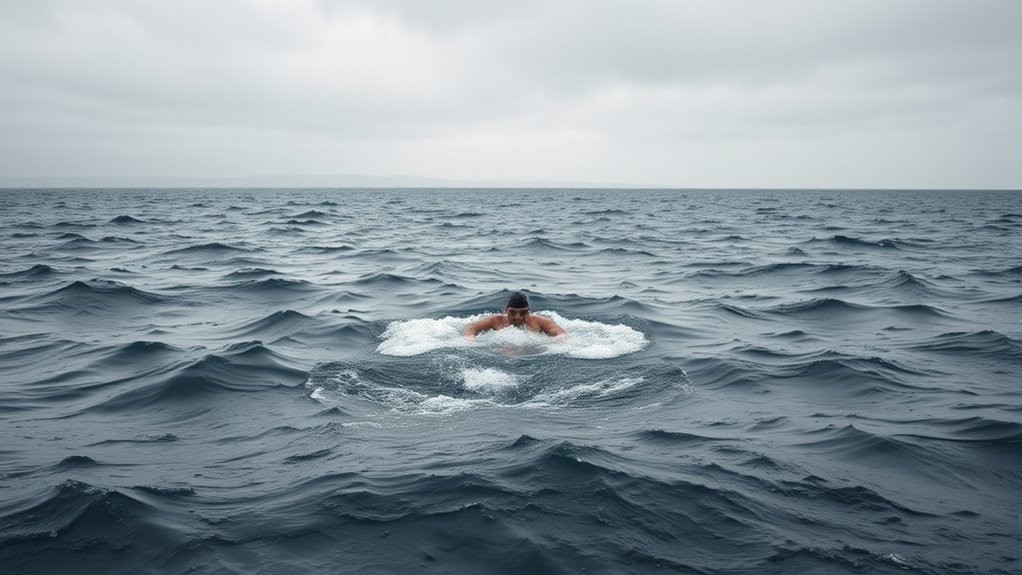
Yes, people have died attempting to swim the English Channel, though fatalities are rare. The risks include hypothermia from cold water, exhaustion, and sudden medical events like heart attacks. The cold, strong currents, and unpredictable weather can overwhelm even well-prepared swimmers.
Support teams are critical for safety, but dangers remain throughout the swim. Understanding what makes this swim so challenging involves looking at both the physical demands and environmental hazards. If you want to better understand the risks and how safety is improving, exploring the history and challenges of swimming the English Channel will reveal more.
History of Swimming the English Channel
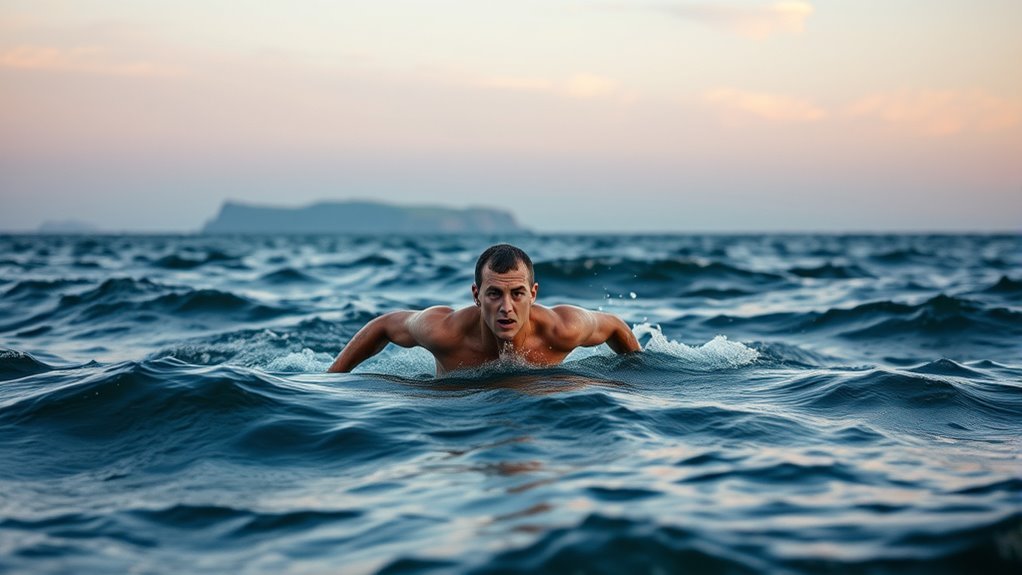
Although many know the English Channel as a challenging stretch of water, its history as a swimming route dates back to 1875 when Captain Matthew Webb became the first person to swim across successfully.
Since then, the Channel has attracted adventurous swimmers enthusiastic to test their endurance and skill.
The Channel continues to inspire swimmers eager to challenge their limits and embrace the adventure.
You’ll find that the swim covers about 21 miles, but strong currents and cold temperatures often make the journey longer and tougher.
Over the decades, improvements in training, nutrition, and support boats have helped swimmers tackle these obstacles.
Still, the unpredictable weather and rough seas demand respect and careful planning.
If you’re considering this swim, understanding its rich history reminds you just how extraordinary this feat is and why it continues to draw swimmers worldwide.
Notable Swimmers and Their Achievements
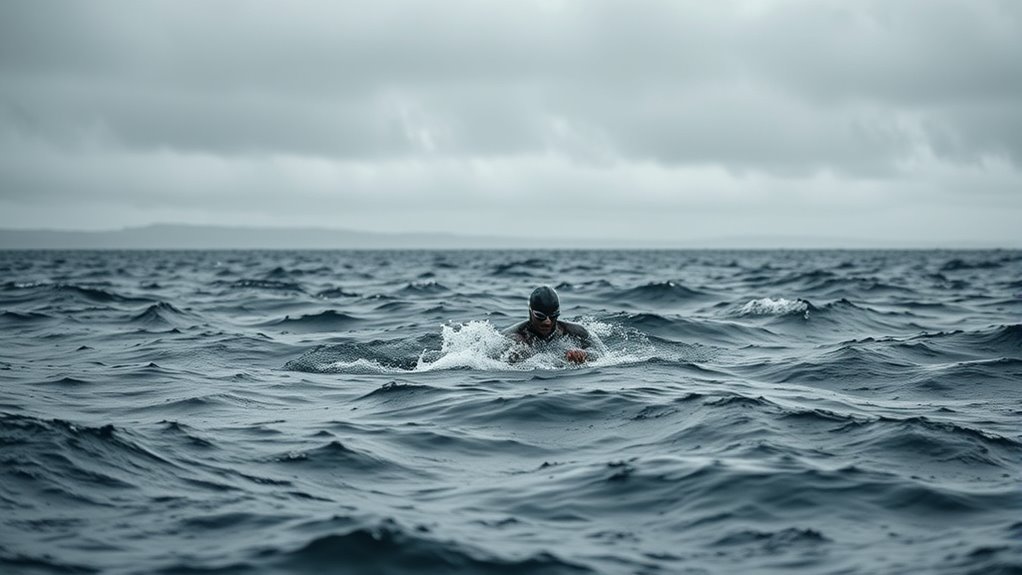
When you look at the history of English Channel swimming, certain names stand out for their remarkable achievements. Take Captain Matthew Webb, for example; in 1875, he became the first person to swim the Channel, completing it in just under 22 hours.
Then there’s Gertrude Ederle, who shattered records in 1926 by becoming the first woman to conquer the Channel, finishing faster than Webb’s time.
More recently, Sarah Thomas made headlines by becoming the first person to swim the Channel four times nonstop in 2019.
These swimmers didn’t just cross the water; they pushed human limits, inspiring countless others. When you follow their stories, you realize their achievements aren’t just about endurance but also about determination and courage.
Common Dangers and Risks of Channel Swimming
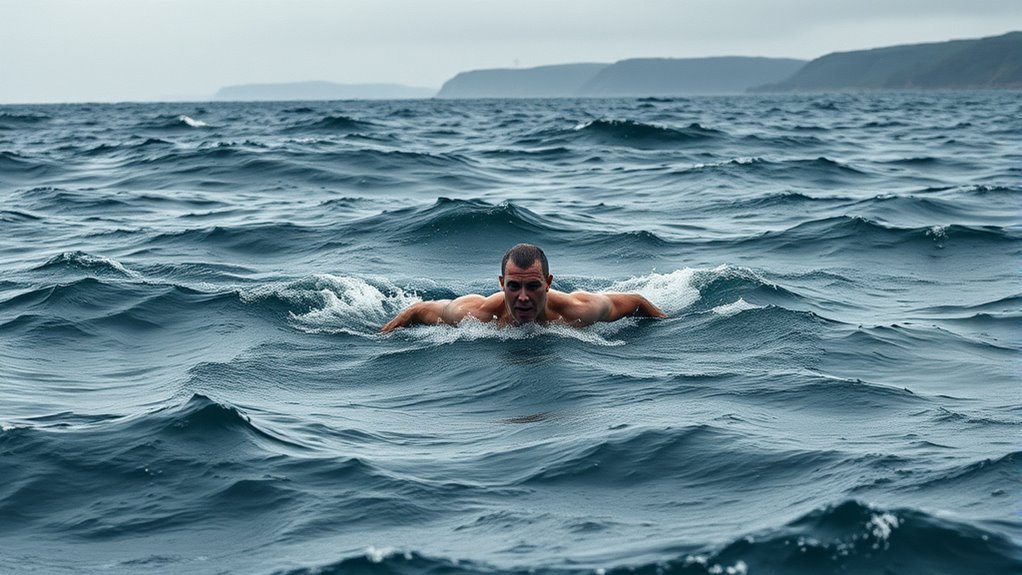
Because the English Channel presents unpredictable conditions, you face serious dangers every time you attempt the swim. Hypothermia is a major risk since the water stays cold year-round, causing your body temperature to drop dangerously.
Strong currents can push you off course, making navigation a constant challenge. Fatigue and muscle cramps often set in, especially during the long hours required to cross.
You also risk dehydration and exhaustion from the physical exertion. Marine life, while usually not aggressive, can still startle or injure you.
Night swimming or low visibility increases the chance of accidents. You must be prepared for sudden waves and boat traffic, which pose additional hazards.
Understanding and respecting these risks is essential before you plunge in.
Weather and Water Conditions Impacting Safety
The unpredictable weather and ever-changing water conditions in the English Channel can quickly turn a challenging swim into a dangerous one. As you prepare to cross, you must be ready to face sudden changes like strong winds, heavy fog, or unexpected rain, all of which can impair visibility and navigation.
The water temperature is another vital factor; it often hovers between 15-18°C (59-64°F), which can cause hypothermia if you’re not properly acclimated.
Additionally, strong currents and tidal shifts can push you off course or exhaust you faster than anticipated.
Consider these factors carefully before your swim:
- Rapid weather shifts affecting visibility and sea state
- Cold water temperatures increasing hypothermia risk
- Powerful tidal currents altering your route and pace
Safety Protocols and Support Teams
Although the English Channel presents numerous hazards, having a well-prepared safety protocol and a skilled support team can make all the difference in your swim’s outcome.
Your support crew monitors weather, water conditions, and your physical state throughout the swim, ready to react instantly if trouble arises.
They navigate the boat, provide nutrition, and communicate with authorities when necessary.
Before you start, your team ensures you understand the route and emergency procedures.
They also coordinate with official Channel swimming organizations to verify compliance with safety standards.
With trained observers on board, your progress is tracked accurately, while your team’s vigilance helps prevent accidents.
Ultimately, you rely on this expert support to keep you safe in one of the world’s most challenging open-water swims.
Medical Incidents During Channel Attempts
When you attempt to swim the English Channel, your body faces extreme physical stress that can trigger serious medical incidents. The cold water, exhaustion, and prolonged exertion challenge your cardiovascular and respiratory systems, sometimes leading to dangerous situations. Medical support teams stay alert for signs of trouble, ready to intervene quickly.
Common medical incidents during these attempts include:
Hypothermia, caused by prolonged exposure to cold water, which can impair your motor skills and judgment.
Muscle cramps or exhaustion, which may force you to stop or slow down.
Dehydration and electrolyte imbalance, resulting from intense physical exertion without adequate replenishment.
Being aware of these risks helps you prepare better and recognize warning signs early.
Documented Fatalities and Their Circumstances
If you plan to swim the English Channel, you must understand that fatalities have occurred despite careful preparation and support. Documented deaths are rare but often involve hypothermia, exhaustion, or sudden medical events like heart attacks.
Many swimmers face unpredictable weather and strong currents, which can overwhelm even experienced individuals. In some cases, swimmers have drowned after becoming disoriented or losing strength far from their escort boats.
Rescue efforts are swift, but the cold water and physical strain pose serious risks. Knowing these documented incidents helps you grasp the Channel’s dangers, emphasizing the need for vigilance during your attempt.
While fatalities are uncommon, they remind you that the Channel demands respect and serious caution every time you enter its waters.
Training and Preparation for Channel Swimmers
Because swimming the English Channel pushes your body to its limits, rigorous training and thorough preparation are essential. You’ll need to build endurance, adapt to cold water, and develop mental toughness.
Swimming the English Channel demands rigorous training, endurance, cold water adaptation, and strong mental toughness.
Training usually involves long-distance swims in open water to mimic Channel conditions.
Nutrition and hydration strategies during the swim are equally important to maintain energy.
Additionally, you’ll want to work closely with an experienced coach or team to tailor your preparation and ensure safety.
Key focus areas include:
- Building stamina with progressively longer swims
- Practicing in cold water to acclimate your body
- Planning nutrition and hydration to sustain energy
Advances in Safety Technology for Open-Water Swimming
As open-water swimming grows in popularity, safety technology has evolved to protect swimmers in challenging environments like the English Channel. You can now rely on GPS trackers, waterproof communication devices, and advanced wetsuits that improve buoyancy and thermal regulation.
Support boats are equipped with sonar and radar to monitor swimmer location and nearby marine traffic, enhancing your safety. Here’s a quick overview:
| Technology | Purpose | Benefit |
|---|---|---|
| GPS Trackers | Real-time location tracking | Prevents swimmer from getting lost |
| Waterproof Radios | Communication between swimmer & crew | Immediate emergency response |
| Thermal Wetsuits | Temperature control | Reduces hypothermia risk |
| Sonar Systems | Detect nearby underwater objects | Avoids collisions |
| Radar Equipment | Monitor marine traffic | Increases swimmer protection |
These advances make your Channel swim safer than ever before.
The Future of English Channel Swimming Safety
While current technologies have considerably improved safety for English Channel swimmers, future innovations promise even greater protection and peace of mind. As you prepare for your swim, you can expect smarter, more responsive equipment to monitor your condition and environmental hazards in real time.
Advances in AI and wearable tech will let safety teams react instantly to any signs of trouble. You’ll also benefit from improved forecasting tools that predict weather and sea conditions with remarkable accuracy.
Here are some future safety enhancements you can look forward to:
- AI-driven health monitoring wearables that alert support crews immediately
- Real-time environmental sensors tracking water temperature, currents, and marine life
- Enhanced communication devices enabling constant swimmer-to-support contact
These innovations will help you focus on your swim while staying safer than ever before.
Frequently Asked Questions
What Is the Average Time It Takes to Swim the English Channel?
You’ll typically take around 13 to 16 hours to swim the English Channel, but times vary widely depending on your skill, weather, and currents.
Some swimmers finish faster, while others take much longer.
How Do Swimmers Navigate During Their Channel Crossing?
How do you find your way in open water? You rely on your support boat’s captain, who uses GPS and landmarks to guide you, while you focus on swimming straight through currents and waves to reach the shore safely.
What Are the Most Popular Months for Attempting the Swim?
You’ll find most swimmers attempt the English Channel crossing between July and September when water temperatures are warmer and weather conditions are more favorable.
This timing helps improve safety and increases your chances of a successful swim.
Can Swimmers Use Wetsuits During Official Channel Swims?
No, you can’t use wetsuits during official English Channel swims; the rules require traditional swimwear only. This maintains the challenge’s integrity and aligns with the Channel Swimming Association’s strict guidelines for solo swims.
Wearing only standard swimwear ensures that all swimmers face the same conditions without additional buoyancy or insulation. This preserves the historical and physical challenge of the swim.
How Do Tides Affect the Swimmer’s Route and Timing?
Tides dramatically shift your route and timing; you’ll need to navigate unpredictable currents that push you off course. Mastering tide schedules is essential—mistiming them can mean swimming longer, battling stronger currents, or even failing your crossing.
Conclusion
You might be surprised to learn that while many have braved the English Channel, fatalities remain rare—almost as if the Channel itself respects those who prepare well.
Yet, the coincidence is striking: many dangers arise from underestimating the water’s power or weather’s sudden change.
So, if you’re considering the swim, remember that respect, preparation, and a solid support team aren’t just precautions—they’re your best chance to make history safely.
Understanding the risks and staying vigilant are key factors in preventing any fatal outcomes when swimming the English Channel.