7 Factors Affecting How Much an Inground Swimming Pool Costs
When figuring out how much an inground pool will cost you, consider these seven key factors: pool size and shape, material choice, site conditions, extra features, local labor rates and permits, pool heating and maintenance systems, and surrounding landscaping or decking. Bigger or custom designs can significantly hike expenses, while the material you choose—like concrete or vinyl—affects both price and upkeep.
Site conditions may complicate installation, adding to the overall cost. Extra features such as lighting or heating also increase expenses. Local labor rates and permits vary depending on your location, influencing the initial outlay.
Pool heating and maintenance systems impact ongoing costs, so be sure to factor them into your budget. Finally, surrounding landscaping or decking can substantially raise the total investment. Keep reading to uncover what else impacts your inground swimming pool investment.
Pool Size and Shape
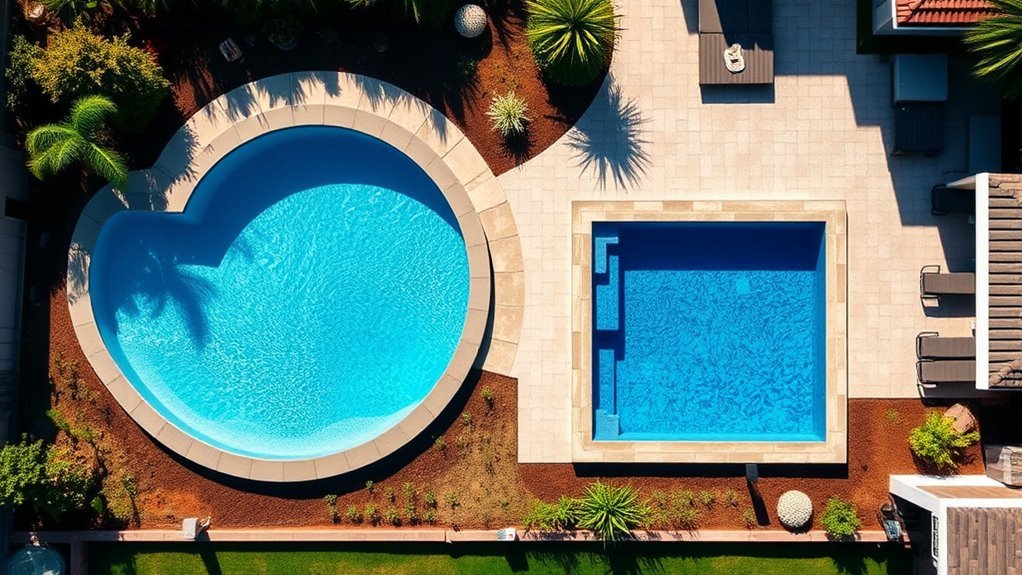
The size and shape of your inground pool play a major role in determining the overall cost. Larger pools require more excavation, materials, and labor, which means you’ll pay more upfront.
If you opt for a simple rectangular design, installation tends to be quicker and less expensive. However, choosing a custom or irregular shape adds complexity, increasing both labor time and costs.
Additionally, intricate shapes might require specialized equipment or additional structural support, pushing the price higher.
Keep in mind that bigger pools also mean higher ongoing maintenance and operating expenses.
When deciding, balance your desire for size and style with your budget to avoid surprises. By carefully considering these factors, you can find a pool design that fits both your lifestyle and wallet efficiently.
Choice of Pool Materials
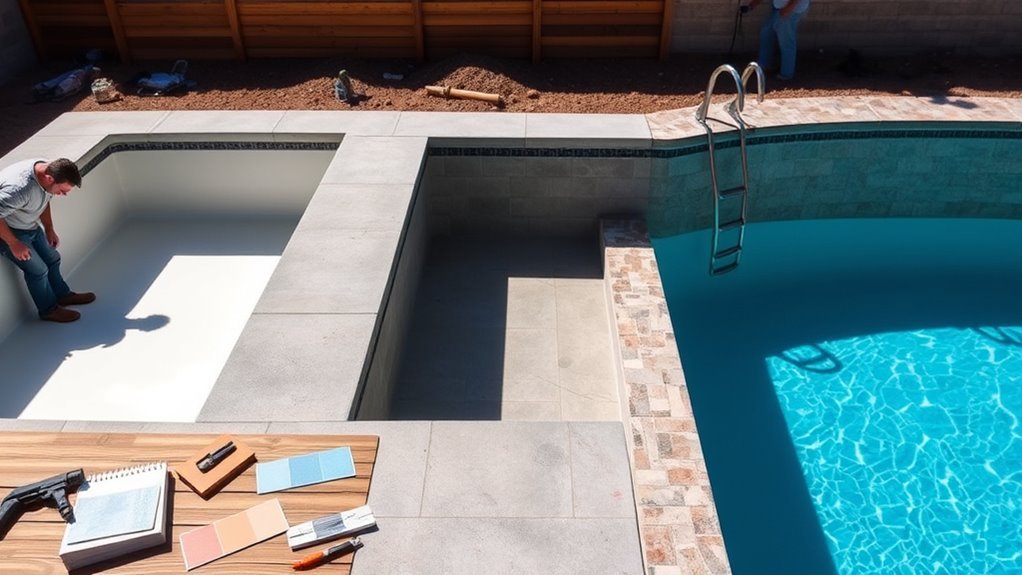
Once you’ve settled on the size and shape of your pool, your choice of materials will considerably impact both costs and durability. You’ll find that common materials like concrete, vinyl, and fiberglass each come with distinct price points and maintenance needs.
Concrete pools offer customization but require more upkeep, while vinyl is budget-friendly but less durable. Fiberglass pools provide a quick install and smooth finish but at a higher upfront cost.
| Material | Cost Range |
|---|---|
| Concrete | $$$ – $$$$ |
| Vinyl | $ – $$ |
| Fiberglass | $$ – $$$ |
| Steel | $$ – $$$ |
| Polymer | $ – $$ |
Choosing the right material balances your budget with how much maintenance and longevity you want.
Installation Complexity and Site Conditions
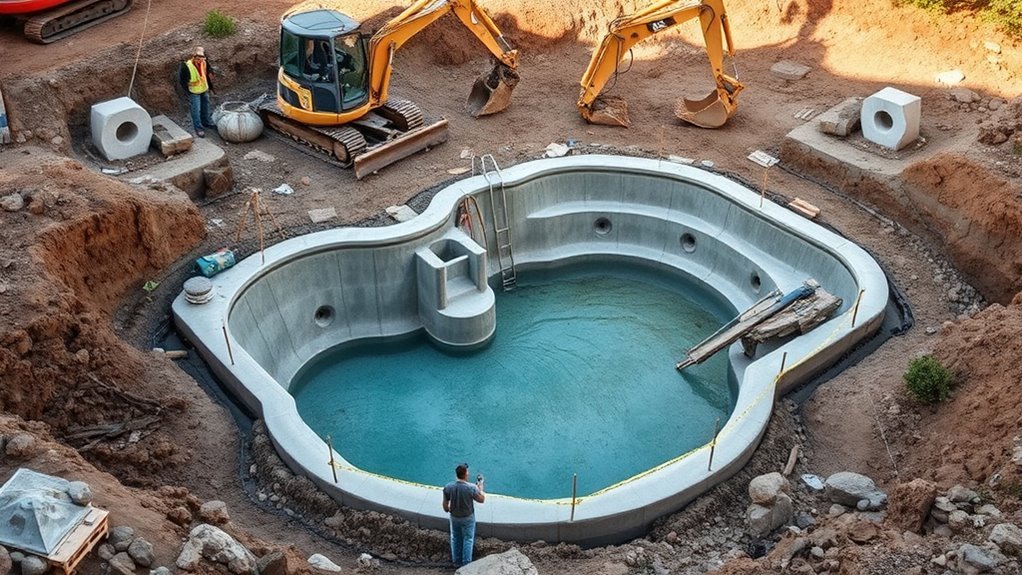
Because installation complexity varies widely, you’ll want to assess your site conditions carefully before committing. Factors like soil type, slope, and accessibility considerably impact the difficulty of installation.
Rocky or clay-heavy soil requires extra excavation effort, raising labor and equipment costs.
If your yard has a steep incline, expect additional grading or retaining walls to create a stable pool base.
Limited access to the site can also increase expenses, as contractors may need specialized equipment or longer setup times.
Drainage issues or proximity to underground utilities add further complexity, requiring careful planning to avoid damage or delays.
Additional Features and Accessories
When you customize your inground pool with additional features and accessories, you can enhance both its functionality and aesthetic appeal. Adding elements like waterfalls, lighting, or heating systems can transform your pool into a more enjoyable and inviting space.
Features such as automated covers, pool cleaners, or saltwater systems improve maintenance convenience and water quality. Keep in mind that each upgrade increases the initial cost, so prioritize what matters most to you.
For example, LED lighting boosts nighttime ambiance but costs less than installing a spa or elaborate water features. Accessories like fencing, decking, or landscaping also add to the overall expense but contribute to safety and curb appeal.
Carefully choosing your upgrades allows you to balance cost with the lifestyle benefits your pool provides.
Local Labor and Permit Costs
Although your pool design and features greatly influence the total cost, local labor rates and permit fees also play a crucial role.
Labor costs vary considerably depending on where you live; areas with higher wages or limited pool construction experts will naturally charge more. You’ll want to get multiple quotes to understand what’s reasonable in your region.
Labor rates differ by location; obtaining several estimates ensures you find fair pricing in your area.
Additionally, local governments require permits to ensure your pool meets safety and zoning regulations. Permit fees differ widely and can add several hundred to a few thousand dollars to your budget.
Skipping permits isn’t an option; it can lead to fines or forced removal.
Factoring in these local costs early helps you avoid surprises and keeps your project on track financially.
Pool Heating and Maintenance Systems
After accounting for local labor and permit expenses, you’ll want to contemplate how heating and maintenance systems impact your inground pool costs. These systems can notably influence your initial investment and ongoing expenses. Consider these factors:
- Heating Options: Solar, gas, and electric heaters vary in upfront cost and efficiency. Solar is eco-friendly but pricey initially; gas heats quickly but costs more to run.
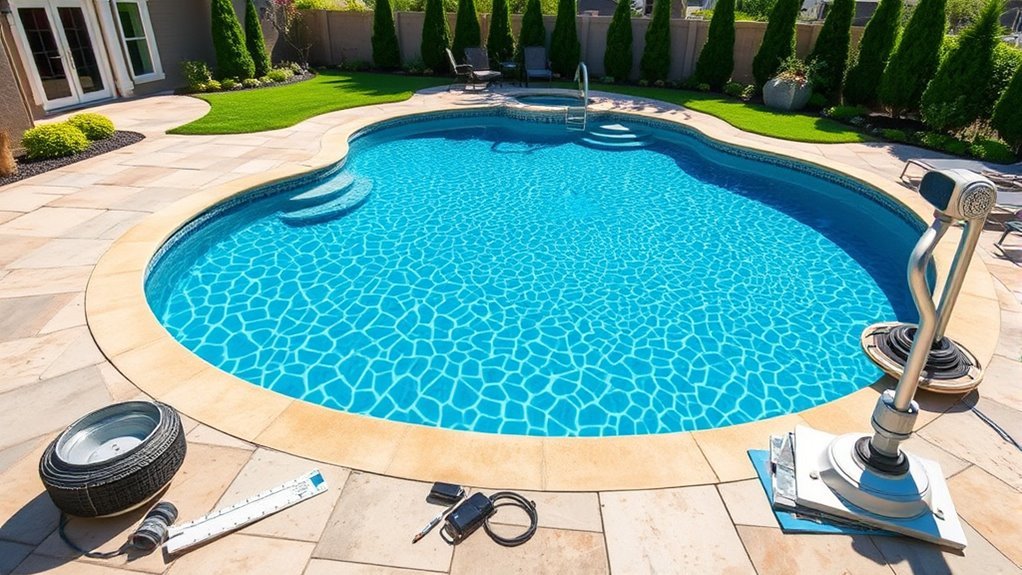
- Automation Systems: Automated pool cleaners and chemical dispensers reduce manual work but add to installation costs.
- Energy Efficiency: Energy-efficient pumps and heaters save money long-term but might increase your initial budget.
- Maintenance Equipment: Choosing quality filters and sanitation systems (saltwater vs. chlorine) affects both installation and upkeep expenses.
Balancing your comfort preferences with budget constraints helps you pick the right heating and maintenance setup without overspending.
Landscaping and Surrounding Decking
Since landscaping and decking frame your inground pool, they play a crucial role in both aesthetics and functionality. You’ll want to choose materials that complement your home’s style while providing safe, slip-resistant surfaces.
Options range from natural stone and concrete to wood and composite decking, each varying widely in cost.
Choose from natural stone, concrete, wood, or composite decking to suit your style and budget.
Adding plants, lighting, and decorative features enhances the ambiance but also increases expenses.
Keep in mind, complex designs with multiple levels or built-in seating will raise your budget.
Proper landscaping helps with drainage and reduces debris in your pool, lowering maintenance efforts.
When planning, balance your desire for a beautiful, comfortable pool area with realistic costs to ensure your investment matches your lifestyle and budget.
Frequently Asked Questions
How Long Does It Take to Build an Inground Swimming Pool?
It typically takes you about 6 to 12 weeks to build an inground swimming pool. The timeline depends on design complexity, weather, permits, and contractor availability, but you can usually expect the project to finish within a few months.
What Is the Average Lifespan of an Inground Pool?
You can expect your inground pool to last about 25 to 30 years with proper care. Regular maintenance and timely repairs will help you enjoy it longer without major issues or costly replacements.
Taking care of your pool includes cleaning, checking the equipment, and addressing small problems early on. This proactive approach extends the life of your pool significantly.
Are There Financing Options Available for Pool Construction?
Yes, you can find financing options for pool construction, including personal loans, home equity lines, or specialized pool loans.
You should compare terms and rates to choose the best fit for your budget and plans.
How Does Pool Insurance Affect Overall Costs?
Insurance impacts your costs by adding ongoing fees, but it protects you from costly damages or liability claims.
Think of it as a safety net—you’re paying now to avoid paying much more later.
What Are Common Pool Safety Regulations and Requirements?
You’ll need to install fences at least four feet high with self-closing gates, use pool covers or alarms, and guarantee proper drain covers.
Local codes may require CPR signs and safety equipment like life rings nearby.
Conclusion
When planning your inground pool, remember size and features can make a big difference—did you know the average pool size costs about 30% more than smaller ones? By choosing materials wisely and considering installation challenges, you can control expenses without sacrificing quality.
Don’t forget permits and landscaping, which add up quickly. These factors play a crucial role in the overall inground swimming pool costs.
With smart decisions, you’ll enjoy a beautiful backyard oasis that fits your budget and lifestyle perfectly, balancing cost and quality effectively.