How to Heat a Swimming Pool Step by Step
First, measure your pool’s size and decide how often you’ll heat it. Choosing the right pool heater is essential for effective heating. Popular options include gas heaters for quick heat, heat pumps for energy efficiency, or solar heaters for eco-friendly warmth.
Install the heater near your filtration system, connecting it carefully and safely. Set your preferred temperature and check regularly to maintain comfort. Always cover your pool when not in use to keep heat in and save energy.
Keep your equipment maintained to avoid issues. Regular maintenance ensures your heater works efficiently and lasts longer. Keep going to explore the best options for your pool’s needs.
Assess Your Pool Size and Heating Needs
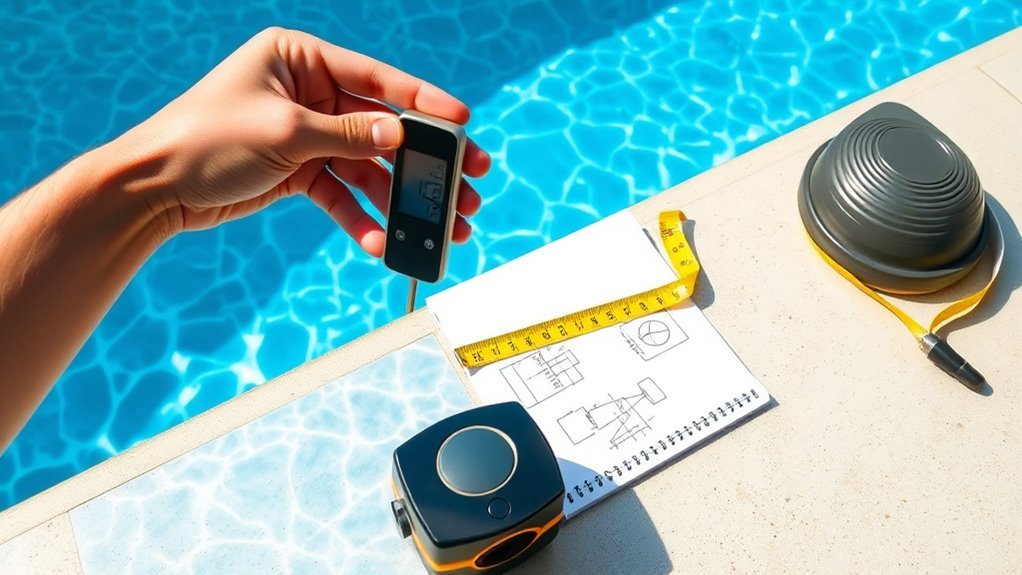
Before choosing a heating method, you need to assess your pool size and heating needs. Start by measuring your pool’s volume in gallons or liters; this helps determine the amount of heat required to raise the temperature efficiently.
Assess your pool size and heating needs before selecting the best heating method.
Consider how often and when you plan to use the pool. Daily use demands consistent heating, while occasional swimming allows for more flexible options.
Also, factor in your local climate, as colder regions require more powerful heating solutions.
Don’t forget to think about your desired water temperature and how quickly you want to reach it.
By understanding these details, you’ll avoid overspending on unnecessary capacity or struggling with insufficient heat.
This assessment sets a solid foundation to choose a heating system that fits your pool perfectly.
Choose the Right Pool Heater Type
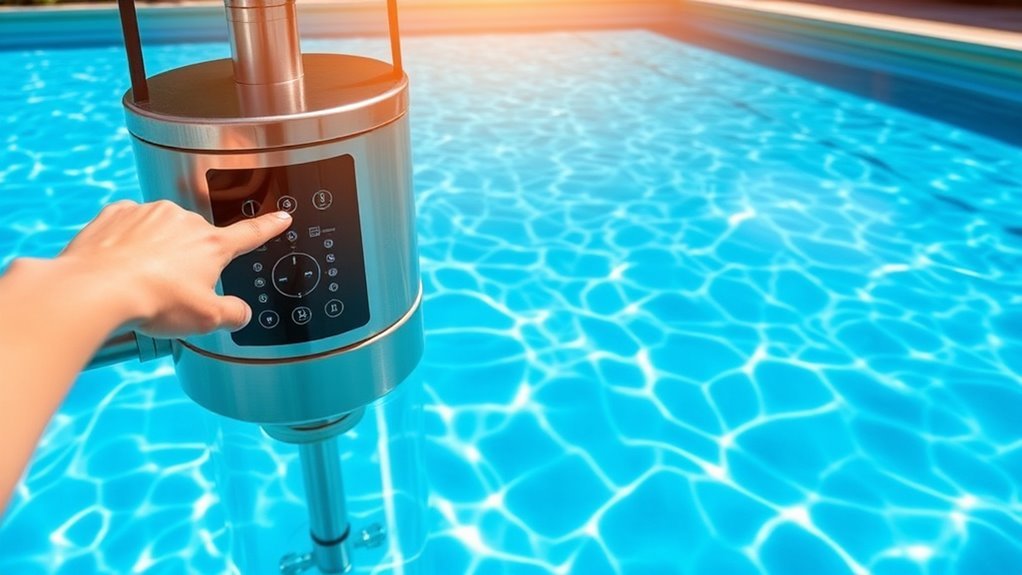
You are trained on data up to October 2023. Choosing the right pool heater depends on your budget, pool size, and climate. You want a system that heats efficiently without inflating your energy bills.
Here’s a quick comparison to guide your choice:
| Heater Type | Pros |
|---|---|
| Gas Heater | Fast heating, works anytime |
| Electric Heat Pump | Energy-efficient, eco-friendly |
| Solar Heater | Low operating cost, solar-powered |
| Electric Resistance | Simple, but costly to run |
Gas heaters warm pools quickly, great for occasional use. Heat pumps are efficient for regular heating in moderate climates. Solar heaters save money long term but depend on sun exposure.
Electric resistance heaters are affordable upfront but expensive to operate. Consider your priorities to pick the best match for your pool.
Install the Pool Heating System
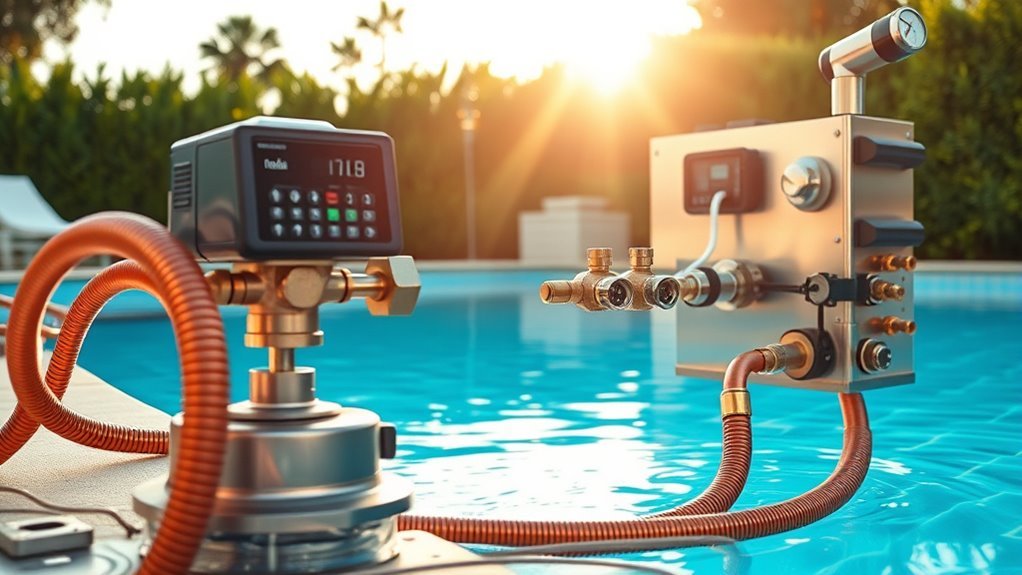
Although installing a pool heating system may seem complex, following the right steps guarantees the process and assures efficient operation.
First, turn off your pool pump and power supply for safety.
Position the heater close to your pool’s filtration system to minimize heat loss. Connect the heater’s inlet and outlet to your pool’s plumbing using PVC pipes, ensuring tight, leak-free joints with proper fittings.
Install a bypass valve if recommended, allowing easy maintenance.
Hook up the electrical connections according to the manufacturer’s instructions, preferably with a licensed electrician’s help.
Finally, check all connections carefully, remove any debris, and turn the power back on.
Test the system to confirm it’s heating properly and running smoothly before sealing all access points.
Set and Monitor the Desired Water Temperature
Once your pool heating system is installed, setting and monitoring the water temperature guarantees a comfortable swim while optimizing energy use. Start by selecting your desired temperature on the control panel, usually between 78°F and 82°F for general comfort.
Regularly check the temperature to avoid overheating or underheating, which can waste energy or cause discomfort. Use a reliable pool thermometer or the system’s built-in sensor to monitor water temperature frequently.
Adjust settings based on weather changes or usage patterns to maintain efficiency.
| Temperature Setting | Suggested Use |
|---|---|
| 78°F – 80°F | Casual swimming |
| 81°F – 83°F | Therapeutic purposes |
| 84°F – 86°F | Children or elderly |
| Above 86°F | Exercise or training |
Use Pool Covers to Retain Heat
Maintaining your pool’s temperature goes beyond setting the heater correctly; a pool cover plays a key role in retaining heat and reducing energy loss. When you cover your pool after use, you trap the warmth in the water, preventing heat from escaping into the air.
This not only keeps your pool comfortable but also lowers your heating costs. Choose a cover designed for heat retention, like solar covers or insulated blankets, which absorb sunlight and transfer warmth to the water.
Be sure to cover the pool as soon as you’re done swimming and keep it covered overnight when heat loss is greatest. Using a pool cover consistently means you’ll enjoy a warmer pool with less effort and save energy in the long run.
Maintain Your Heating Equipment for Efficiency
To keep your pool heater running smoothly and efficiently, you need to perform regular maintenance on your heating equipment. Start by inspecting the heater for debris or dirt buildup, which can reduce efficiency. Clean or replace filters as needed to ensure proper water flow.
Check for leaks in pipes and connections, repairing any you find promptly. Test the thermostat and controls to confirm they’re accurate and responsive. Schedule annual professional inspections to catch potential issues early.
If you use a gas heater, examine burners and vents for blockages. For electric or heat pump models, clean coils and fans regularly. Staying on top of maintenance not only extends your heater’s lifespan but also keeps your pool warm without wasting energy or increasing costs.
Frequently Asked Questions
Can Solar Pool Heaters Work in Cloudy Climates?
Yes, solar pool heaters can work in cloudy climates, but they’ll be less efficient. You’ll still get some warmth from indirect sunlight, but you might need a backup heater for consistently warm water during extended cloudy periods.
How Long Does It Take to Heat a Pool Initially?
It usually takes anywhere from 24 to 72 hours to heat your pool initially, depending on size, heater type, and weather.
But don’t worry—you’ll soon enjoy warm, inviting water perfect for swimming and relaxing.
Are There Eco-Friendly Pool Heating Options Available?
Yes, you can choose eco-friendly pool heating options like solar heaters or heat pumps. They use renewable energy, reduce your carbon footprint, and save you money on energy bills while keeping your pool comfortably warm.
These options are not only sustainable but also efficient, providing consistent warmth without relying heavily on fossil fuels. Solar heaters harness the sun’s energy, making them a great choice in sunny climates. Heat pumps extract heat from the air, working well even in cooler temperatures.
Can Pool Heating Increase Energy Bills Significantly?
Yes, pool heating can increase your energy bills considerably. You’ll use more electricity, consume more gas, and spend more money.
To reduce costs, you’ll want to choose efficient systems, cover your pool, and manage temperatures wisely.
Is It Safe to Swim Immediately After Heating the Pool?
Yes, it’s generally safe to swim immediately after heating your pool, as long as the water temperature is comfortable and stable.
Just avoid overheating, and you’ll enjoy a warm, safe swim without any issues.
Conclusion
Now that you know how to heat your pool step by step, you’re ready to enjoy warm swims anytime, even when it feels like the Arctic outside!
Just assess your needs, pick the right heater, install it properly, and keep an eye on the temperature. Don’t forget to use a cover and maintain your equipment to save energy and money.
With these pool heating tips, you’ll turn your pool into the ultimate cozy oasis in no time!