Pool maintenance

  • How Long After Pool Shock Can You Swim Safely

    After shocking your pool, you should wait until chlorine levels drop below 3 ppm before swimming safely. With chlorine-based shocks, this usually takes 8 to 24 hours, while non-chlorine shocks can allow swimming in as little as 15 minutes to a few hours.

    Keep your pump running and test your water regularly to guarantee safety. Warmer water and sunlight help speed up this process. If you want to know what affects timing and how to accelerate recovery, keep exploring these tips.

  • How Long After Shocking Your Pool Can You Swim

    You can swim after shocking your pool once chlorine levels drop below 3 ppm, which usually takes about 8 hours for chlorine-based shocks. Non-chlorine shocks require a shorter wait, often just 15 minutes to an hour.

    Always test your water with a reliable kit to guarantee chlorine and pH levels are safe. Staying within recommended ranges prevents irritation and health risks.

    Keep following proper guidelines, and you’ll understand how to maintain safe, clean pool water every time.

  • How Do You Lower Ph in Your Swimming Pool Quickly

    To lower your pool’s pH quickly, add muriatic acid or sodium bisulfate in small, careful amounts while the pump runs for good circulation. Always wear protective gear and dilute acids properly before adding to avoid damage or irritation.

    Test pH several hours later and repeat if needed to reach the ideal 7.2–7.8 range. Using these methods helps keep your water safe and comfortable, and with a few tips, you can maintain perfect balance easily.

  • What Happens if You Swim in a Pool With Algae?

    If you swim in a pool with algae, you risk slipping on slimy surfaces and exposing yourself to harmful bacteria that can cause skin rashes, ear infections, and respiratory issues.

    Algae make the water cloudy and murky, reducing visibility and safety, while increasing chlorine demand and clogging filters. This not only affects water quality but also raises maintenance costs.

    To understand more about how algae grow and affect your pool, keep exploring these important details.

  • Why Is My Swimming Pool Water Cloudy?

    Your swimming pool water is cloudy because particles like dirt, algae, or minerals are overwhelming your filtration and chemical treatments. If your chlorine or pH levels are off, bacteria and algae can grow, making the water hazy.

    Also, a clogged or inefficient filter won’t clear out debris properly. Outdoor factors like leaves and pollen can add to the issue. Keep your system balanced and clean, and you’ll find plenty more tips to restore crystal-clear water.

  • Why Is My Swimming Pool Green?

    Your swimming pool turns green mainly because algae have taken hold when chlorine levels drop and water chemistry falls out of balance. Poor filtration and circulation allow algae and debris to build up, while wrong pH or alkalinity reduce chlorine’s effectiveness.

    Metals like copper can also tint the water. Shocking the pool, brushing surfaces, vacuuming, and maintaining proper chemical levels and filtration help clear it up. Keep going to discover how to fix and prevent green pool water.

  • What Causes Mustard Algae in Swimming Pools?

    You’re dealing with mustard algae in your pool because poor circulation, inadequate filtration, and imbalanced water chemistry have created perfect conditions for it to thrive.

    This algae loves shady, warm spots and resists normal chlorine levels, making it stubborn to remove.

    If your pH and sanitizer aren’t right, or you skip regular brushing and cleaning, mustard algae will quickly take hold. Keep going, and you’ll find out how to fight it effectively.

  • How to Fix a Green Swimming Pool Step by Step

    To fix a green swimming pool, start by testing and balancing the water chemistry: pH, chlorine, and alkalinity. Next, remove debris with a skimmer and brush the pool’s walls and floor.

    Shock the pool with chlorine to kill algae, then run your filter nonstop for at least 24-48 hours to clear particles. Finally, add algaecide to prevent regrowth and maintain regular cleaning and chemical checks.

    Keep going to discover more detailed steps and tips for lasting clarity.

  • How to Find a Swimming Pool Leak in 7 Easy Steps

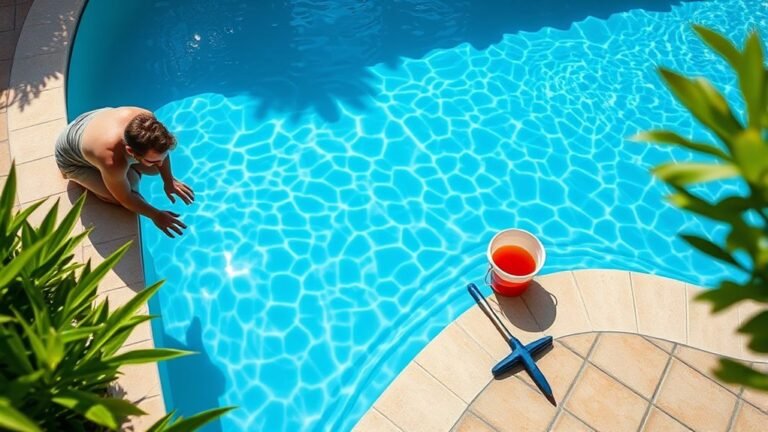
    Start by checking your pool’s water level daily, comparing it to a bucket filled with water to rule out evaporation. Next, inspect your pump, filter, and pipes for drips or cracks.

    Perform the bucket test by matching water levels inside and outside a bucket placed in the pool. Walk the pool shell to spot cracks and look around for wet, damp areas outside the pool.

    Test pool tiles and use dye to pinpoint leaks. Keep exploring these steps to uncover more easy tips for finding leaks.

  • 7 Easy Steps to Close an Above Ground Swimming Pool for Winter

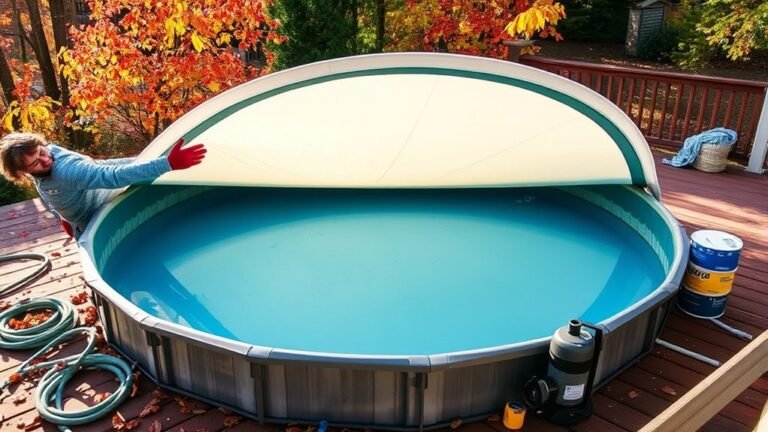
    To close your above ground pool for winter, start by draining water below the skimmer and cleaning the pool thoroughly. Balance the water chemistry, keeping pH, alkalinity, and hardness in range. Lower the water level to prevent freeze damage.

    Add winterizing chemicals like algaecide and shock treatment. Remove and store accessories after drying them completely. Protect your equipment by draining and covering it.

    Finally, secure a heavy-duty winter cover tightly over the pool. Follow these steps to keep your pool safe until spring and discover tips to make reopening easier.